
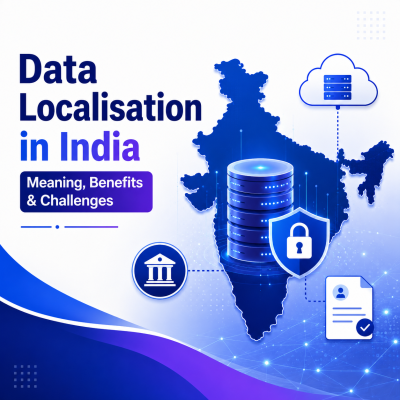
What is Data Localisation?
Data localisation refers to the practice of storing, processing, and managing sensitive digital data within the country where it is collected.
In simpler terms, it ensures that important information stays within India rather than being stored on servers located overseas.
This applies to specific types of sensitive data, such as financial records, personal information, and government-related data.
The main goal of data localisation is to ensure that this data is stored securely, protected against unauthorised access, and used only for lawful purposes. By keeping sensitive data within India, organisations can enhance data security, adhere to regulations, and better protect the privacy of individuals.
Why is Data Localisation Important in India?
- India is rapidly embracing digital technologies, with businesses, banks, hospitals, and government agencies collecting and storing large volumes of sensitive data every day.
- As cyber threats and data breaches become more common, safeguarding this information has become essential.
Data localisation ensures that sensitive data remains stored within India, giving organisations greater control over its management and security. - Keeping data within the country also simplifies regulatory compliance and allows authorities to respond more effectively to cyber incidents when needed.
- It fosters customer trust by demonstrating responsible handling of personal and financial information.
- It also decreases the risk of unauthorised access, lowers the likelihood of costly data breaches, and shields organisations from financial and reputational harm.
- In short, data localisation enhances data security, supports regulatory compliance, builds customer confidence, and contributes to a safer digital environment in India.
DPDPA and Digital Transformation: What's the Connection?
The Digital Personal Data Protection (DPDP) Act, 2023, and digital transformation are closely related because both focus on trust, security, and transparency.
As businesses use digital technologies, websites, mobile apps, cloud platforms, and AI systems, they collect and process vast amounts of personal data.
The DPDP Act promotes the principle of data minimisation, encouraging organisations to collect only the information necessary for a clear and specific purpose. This helps reduce storage costs and lowers security and privacy risks.
The Act also supports the principle of privacy by design.
This means that when developing digital systems, organisations should integrate security and privacy features from the beginning rather than adding them later.
User consent is a key aspect of the DPDP Act.
Before collecting personal data, businesses must clearly inform users about what data is being collected, why it is being collected, and how it will be used. Obtaining informed consent helps build customer trust, promote transparency, and ensure compliance with India's data protection laws.
In short, digital transformation is more effective when it is supported by strong data privacy, security, and responsible data management practices.
What are the Benefits of Data Localisation?
Data localisation offers numerous benefits for businesses, governments, and individuals by ensuring sensitive data remains protected within India’s borders.
Some of the key advantages include:
- Improved Data Security – It ensures that sensitive data is stored securely and protected from unauthorised access and cyber threats.
- Better Regulatory Compliance – Organisations that follow data localisation requirements can avoid legal issues, regulatory fines, and compliance risks.
- Builds Customer Trust – By protecting customers' personal information and collecting or using their data only with proper consent, businesses can strengthen trust and confidence.
- Supports National Security – Keeping critical data within India enhances national security and contributes to a more secure digital environment.
- Reduces Data Risks – Data localisation helps reduce data risks by minimising unnecessary data collection and providing greater control over how sensitive information is stored, managed, and protected.
What are the Challenges of Data Localisation?
While data localisation enhances security and compliance, businesses may encounter several challenges during implementation.
- Higher Infrastructure Costs
If a company's servers are located outside India but operates in the country, it may need to store Indian customers’ data on servers within India to comply with Indian laws.
This can increase infrastructure, storage, and operational costs. - Understanding and Meeting Compliance Requirements
Companies must be aware of all relevant regulations, including industry-specific compliance standards.
Simply storing data within India is not sufficient; organisations must also follow applicable laws and security standards to avoid legal penalties. - Managing Compliance Across Multiple Countries
Some companies operate in multiple countries.
In such cases, they need to comply with not only Indian data localisation rules but also with the data protection and privacy regulations of other countries where they operate. - Data Migration Without Business Disruption
Moving existing customer data to local servers can be a complex process.
Businesses must ensure that the migration is done securely without disrupting regular operations, affecting customer experience, or resulting in data loss.
Data Localisation with Verentix
Data localisation is more than just storing data within a country’s borders.
Companies must understand that storing data in accordance with applicable regulations is equally important.
At Verentix, we assist businesses in achieving secure data management and compliance, whether through API VAPT, cloud security, or compliance-focused cybersecurity solutions.
We help you protect your data, meet regulatory requirements, and strengthen your overall security posture.
Need help with this topic?
Our security experts can assess your specific situation and provide actionable recommendations.
Talk to an Expert